



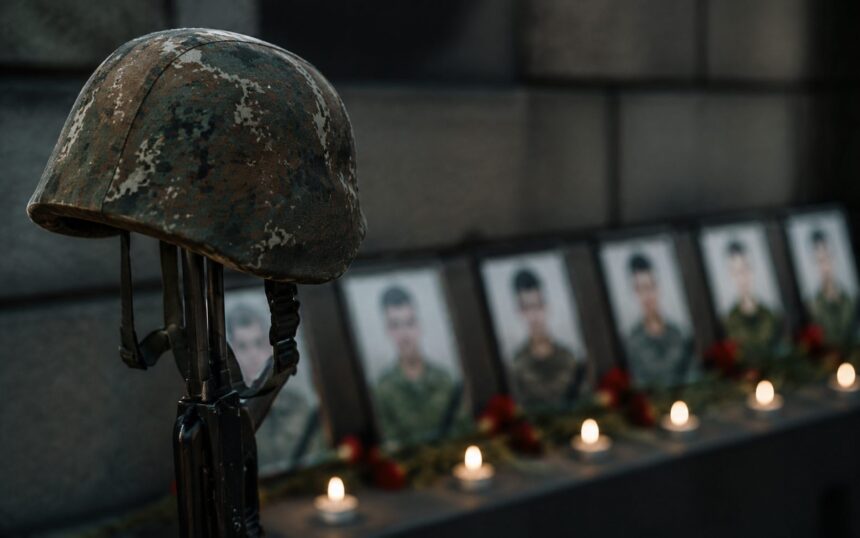
In 2026, 11 deaths were recorded in the Armenian Armed Forces, five of which involved conscripts. According to Ministry of Defense spokesperson Aram Torosyan, each incident requires separate discussion and analysis, depending on whether the case is related to official duties or not.
The ministry emphasizes that it now discloses incidents such as sudden deaths or circumstances unrelated to service, which is a unique approach for the institution. Torosyan stated that unsubstantiated interpretations of statistical data often lead to manipulation, as incidents occurring during actual service are not distinguished from accidents unrelated to non-statutory relationships.
According to current year data, only two of the recorded deaths are related to murders under service-related circumstances, while some cases of suicide and incitement to suicide, according to preliminary data, are attributed to personal issues. The official emphasized that daily measures are being implemented to improve discipline in the army, including psychological work and monitoring of soldiers' conditions. In addition, special methodological manuals and legal educational work are in place to prevent non-statutory relationships.
Ministry representatives regularly visit military units to engage in direct contact with personnel and identify risk groups. Torosyan also denied allegations that the department refrains from supporting or offering condolences to the families of the deceased, assuring that condolences and support are always conveyed to the families.

It is evident that the presentation of data regarding deaths in the army has become one of the main factors of public tension. The Ministry of Defense's separation of statistics into "service-related" and "unrelated" cases is an attempt to avoid generalizations, yet it simultaneously reveals the depth of public distrust.
It is important to understand that in a security environment, a soldier's psychological stability is inseparable from the conduct within the army. When the work of officers and psychologists becomes the sole tool, the question arises as to how much these methods correspond to modern challenges. Ultimately, the human lives behind the numbers demand not only analytical reports but also real changes in the daily life of military units.