




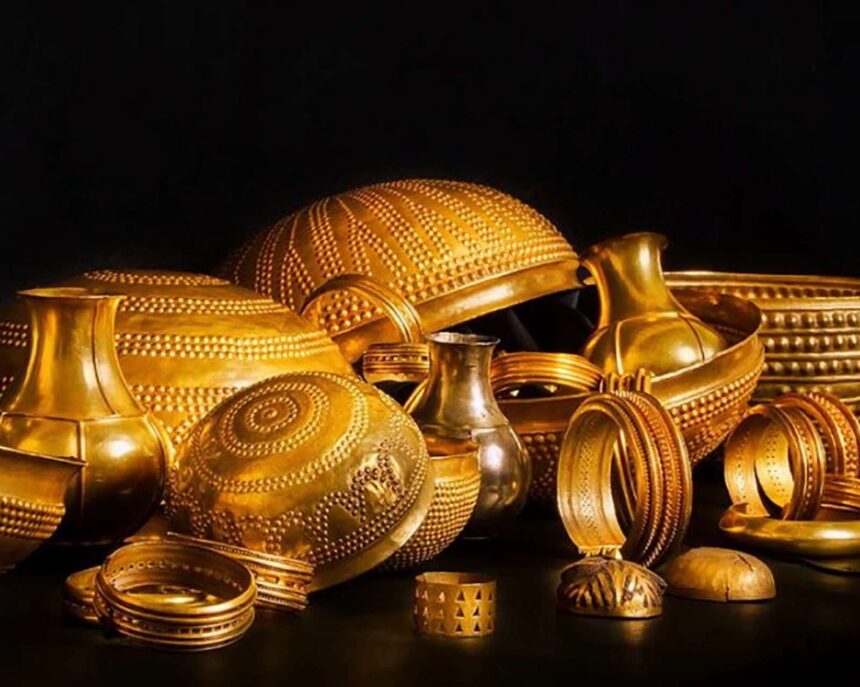
One of Europe's most significant collections of prehistoric gold artifacts has been stolen from the museum in the Spanish town of Villena in just four minutes. Perpetrators took the majority of the 66 items from the famous "Treasure of Villena," with local authorities noting that the operation was carried out with extreme speed and professionalism.
The alarm system went off at 05:20 AM, and the burglars left the premises immediately. The criminals arrived in several vehicles and presumably entered through a window. Shortly before the incident, an alarm had also gone off at the town's sports center, which police believe may have been a diversionary tactic.
Only a few items were left in the museum: three silver vessels, a bracelet, and part of a ceremonial scepter ornament. The "Treasure of Villena" was discovered in 1963 by archaeologist José María Soler in a vessel buried in a dried riverbed. Dating back to around 1000 BC, this collection includes 29 bracelets, 11 bowls, three bottles, and other ornaments made of gold, silver, iron, and amber. Researchers' attention was particularly drawn to certain iron items, which, according to studies, were crafted from rare meteoric iron.
Although the overall historical value of the treasure is impossible to estimate, the material value of the gold items alone is approximately 1.7 million euros. Mauro Hernández, an archaeologist at the University of Alicante, noted that the criminals knew exactly what they were doing in advance. This incident occurred against the backdrop of a rise in daring art thefts at European museums, where criminals are using increasingly aggressive methods.

This heist is not a random crime, but another manifestation of a dangerous growing trend in Europe. Groups involved in the theft of cultural property no longer shy away from daytime or openly aggressive attacks, utilizing diversionary tactics and modern technologies.
Notably, the loss of the "Treasure of Villena" is not only a financial blow, but also a massive scientific one: the items made of meteoric iron in the collection were unique in the entire world. The next step will be an international search, but such artifacts often end up in private collections or, worse, are melted down as raw material, which would irreversibly destroy this historical heritage.