




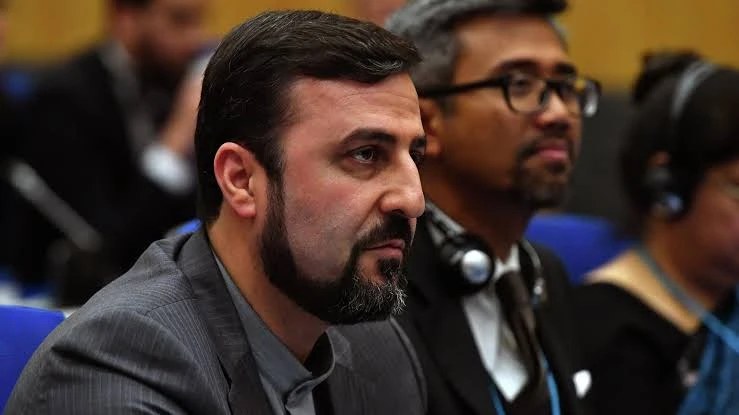
Iranian Deputy Foreign Minister Kazem Gharibabadi has warned that if the country faces another military attack, Tehran's response will differ from the measures it took during previous conflicts. He urged its adversaries to exercise restraint and prevent a resumption of armed hostilities.
Gharibabadi made the remarks during a visit to the Shajareh Tayyebeh elementary school in the city of Minab, Hormozgan Province, stressing that Iran did not start the war but acted in self-defense against external aggression. He expressed hope that the parties to the conflict would make rational decisions to avoid further military operations.
The diplomat called for those responsible for the deadly US-Israeli strike on the school on the first day of the war to be held accountable through international legal mechanisms. According to him, Iranian President Masoud Pezeshkian is paying particular attention to investigating the attack and pursuing the case through legal channels.
Gharibabadi said substantial evidence concerning the attack on the Minab school had been collected and sent to Tehran, and that legal proceedings had already begun. He noted that several foreign countries were also involved in preparing the case and called for those responsible to be brought before international tribunals.


The deputy foreign minister also condemned the use of a stadium in Lamerd, Fars Province, by US military personnel to test new weapons, describing the action as a war crime and calling for a legal assessment. He criticized the international community for failing, in his assessment, to respond effectively to crimes committed during the two wars against Iran.
At the same time, Gharibabadi stressed that Iran's military capabilities and social cohesion had helped the country withstand its adversaries. He described the Strait of Hormuz as a symbol of Iranian identity, declaring that Tehran would use its capabilities to counter its opponents.



The diplomat reiterated Tehran's claim that Iran had not started wars in the past two centuries but had instead resisted aggressors. He emphasized that if another military operation were launched against the country, Iran's response would differ from the measures it took during the 40-day and 12-day wars.
Two key elements stand out in Tehran's statement: the warning of a military response to any new attack and the demand for legal accountability for previous strikes. The two are connected but serve different purposes. The first is intended to deter adversaries, while the second seeks an international legal assessment of what happened.
The information that evidence has been collected and legal proceedings have begun in the Minab school case indicates that Iran also wants to pursue the matter through international legal channels. However, the announcement alone does not establish what the process will achieve or whether those responsible can ultimately be held accountable.
Future developments will depend in part on distinguishing official statements from concrete legal steps and their outcomes. The same applies to the warning about a possible new military operation: for now, it is a statement by an Iranian representative, not an already adopted decision or a new attack that has taken place.