



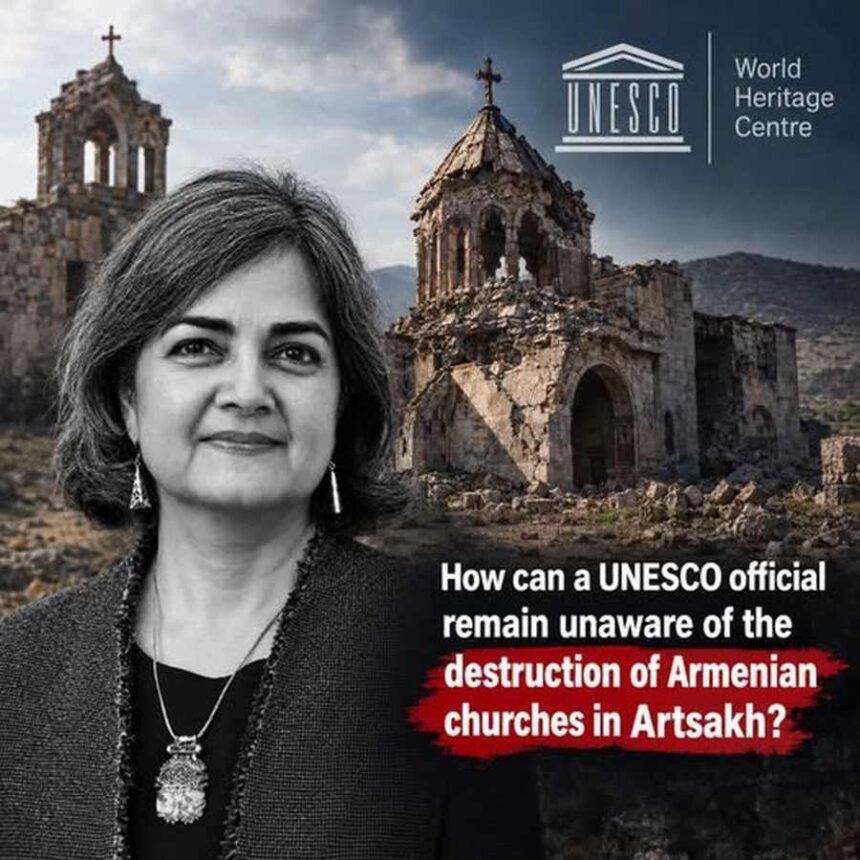
The Artsakh Agency for Culture and Tourism Development has expressed deep outrage and concern over remarks made in Yerevan by Jyoti Hossagrahar, Deputy Director of UNESCO’s World Heritage Centre, who said she was unaware of cases involving the destruction of Armenian churches in Artsakh.
The agency’s statement notes that researchers and non-governmental organizations have long been presenting warnings and documentary evidence of the destruction and damage of Armenian cultural and religious heritage in Artsakh, as well as the distortion of its historical identity. The apparent lack of awareness on the part of a senior representative of an organization responsible for protecting world heritage raises serious questions.
Armenian churches and monasteries in Artsakh are an integral part of humanity’s cultural heritage, and their protection should not depend on political interests.
The agency calls on UNESCO to examine the available facts and evidence, ensure independent international monitoring of the condition of Armenian monuments in Artsakh, and take effective measures to prevent their further destruction and the distortion of their historical identity.



According to the authors of the statement, protecting cultural heritage requires not silence or inaction, but accountability and concrete action. The agency expects UNESCO to state its position clearly and take effective steps to preserve Artsakh’s Armenian cultural heritage.
The statement concerns not only the preservation of individual monuments but also how an international organization assesses the condition of cultural heritage that falls within its area of responsibility. When a representative of the organization says they are unaware of possible acts of destruction, it is necessary to understand what information has reached the organization and what procedures are used to examine it.



The agency’s demands include examining the available evidence and establishing independent international monitoring. Implementing these measures would help provide a clearer picture of the condition of the monuments. However, the demands outlined in the statement do not in themselves mean that such a process has already begun. UNESCO’s official response and the practical measures it proposes to protect Armenian cultural heritage will be decisive in shaping further assessments.