

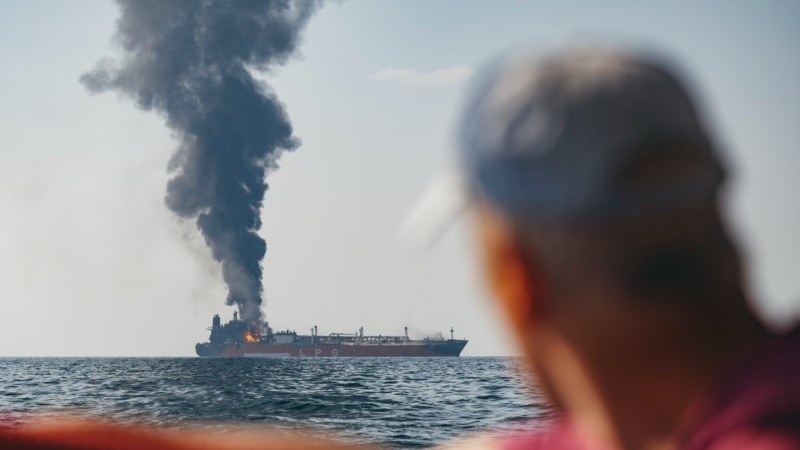
Iran’s armed forces have announced that four oil tankers struck mines in the Strait of Hormuz. The Islamic Revolutionary Guard Corps reported that two large oil tankers hit sea mines in the strait, while the navy stated that two more oil tankers struck mines in the southern part of the waterway.
The first two tankers were transiting with the support of U.S. Central Command. The others hit mines while attempting to cross the strait via a route not coordinated with Tehran.
The Islamic Revolutionary Guard Corps has repeatedly warned about the dangers of using the maritime route passing south of the Strait of Hormuz near Oman, emphasizing that the waters remain under the control of Iran’s armed forces. Since the very first days of the war, Iran has closed the Strait of Hormuz to "unfriendly countries," while the United States has imposed a blockade on Iranian ports.
Both Iran and the United States claim control over the strait, through which roughly 20 percent of the world's consumed natural gas and oil passed before the war. Washington and Tehran continue indirect contacts, primarily through Qatari mediation, though despite recent diplomatic activity, there is still no word on the resumption of formal negotiations or a potential agreement.
On November 20, U.S. presidential envoys Steve Witkoff and Jared Kushner met with senior Qatari officials in Berlin to discuss negotiations and mediation efforts with Iran. On the same day, a Qatari delegation visited Tehran and held roughly two hours of talks with Iranian officials, according to Iranian Deputy Foreign Minister Kazem Gharibabadi. Meanwhile, on November 21, Iranian Foreign Minister Abbas Araghchi stated that Qatar and Pakistan are continuing their mediation efforts and that Tehran is ready to discuss its proposals.
The reports of ship explosions in the Strait of Hormuz come at a time when tensions around the waterway persist and warnings regarding navigational hazards remain in effect. Given that roughly 20 percent of global natural gas and oil passed through this waterway before the war, such incidents directly impact regional security and the situation surrounding energy routes.

At the same time, diplomatic contacts have not ceased, though there is no visible progress so far. Even after the meetings in Berlin and Tehran and the statements regarding mediation, there is no clarity on the resumption of official negotiations or a possible agreement.
Notably, amid the conflict and mutual restrictions, both sides continue to assert their control over the strait. The coming days will show whether mediation efforts will translate into formal talks or whether tensions will persist.