


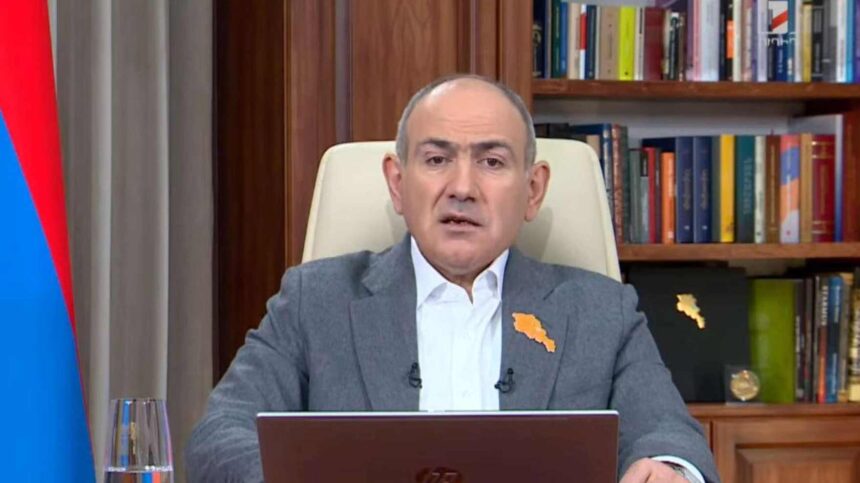
Armenian Prime Minister Nikol Pashinyan and U.S. President Donald Trump announced the official launch of the TRIPP project via video addresses. Pashinyan described the day as historic, noting that the program will hold major significance not only for Armenia and the South Caucasus, but for the entire world.
According to the Prime Minister, this marks the beginning of Armenia's largest economic program since independence. It will significantly boost access to foreign markets, improve the business environment, and attract investments. The project will also help residents of the Syunik province fully unlock the region's development potential.
Pashinyan stated that TRIPP will make a serious contribution to strengthening the country's security by increasing Armenia's international standing and expanding the circle of stakeholders invested in stability. He pointed to strong interest from international financial institutions, partner states, and investors as evidence of this. Pashinyan also noted that in addition to connecting Azerbaijan to Nakhichevan and ensuring domestic and international connectivity, the program will give new momentum to the Trans-Caspian trade route and East–West connectivity.
On August 8, 2025, in Washington, Nikol Pashinyan and Azerbaijani President Ilham Aliyev signed a seven-point joint declaration. It envisioned creating the "Trump Route" (TRIPP) strategic transit road through the Syunik province to provide Azerbaijan with a commercial link to Nakhichevan.
On October 28, 2026, Armenia's National Assembly ratified the corresponding agreement signed between Armenia and the United States by a vote of 63 in favor, 32 against, and 0 abstentions. On November 7, the United States, Armenia, and Azerbaijan established a trilateral technical working group to develop the project.
More than a year passed between the signing of the Washington declaration and the practical launch, during which the process went through parliamentary ratification and the formation of the trilateral technical group. This indicates that the project is moving beyond political statements into the engineering and economic implementation phase.



Notably, official Yerevan presents the program not merely as a regional transit route, but as a security guarantee grounded in the involvement of international investors and major financial institutions. However, the key question in the coming months will remain the timeline and terms under which the trilateral technical group will be able to agree on the road's operational details.