


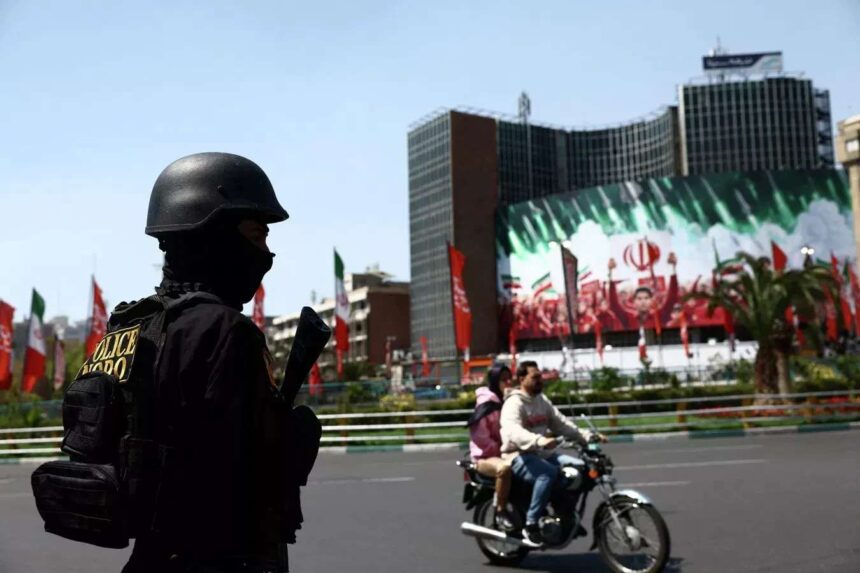
The U.S. Virtual Embassy in Iran announced that Tehran, Yemen's Houthis, and other allied groups could target American interests and citizens in the region, including companies and institutions. In a statement released on November 25, the diplomatic mission warned that military operations could escalate rapidly.
The embassy urged Americans not to travel to Iran under any circumstances and called on citizens already there to leave the country immediately. U.S. citizens in the region should closely monitor the operations of airlines and airports. They have been advised to be prepared for potential flight cancellations and airspace closures.
Washington has urged its citizens in the Middle East to maintain heightened vigilance following Iranian attacks on U.S. facilities in Bahrain and Kuwait. Additionally, Yemen's Houthis struck a tower in Riyadh's financial district, injuring 11 people, according to Saudi Arabia's Civil Defense. Bahrain's Ministry of Interior also reported that two people were injured and a fire broke out at a civilian industrial facility as a result of Tehran's attacks on November 21.
The United States and Iran have not had diplomatic relations since 1980. Switzerland represents U.S. interests in Tehran, so citizens in need of assistance can contact the U.S. Interests Section at the Swiss Embassy in Iran.
The new wave of tension in the Middle East is already directly affecting civil aviation and the safety of foreigners in the region. Recent strikes recorded in Bahrain, Kuwait, and Saudi Arabia show that the geography of the conflict is expanding beyond isolated, localized clashes.
Notably, the lack of a diplomatic mission further complicates the process of evacuating or organizing assistance for citizens in Iran. In the coming days, the development of the regional situation will depend on whether the parties limit themselves to the strikes already carried out or if new military operations will follow.