



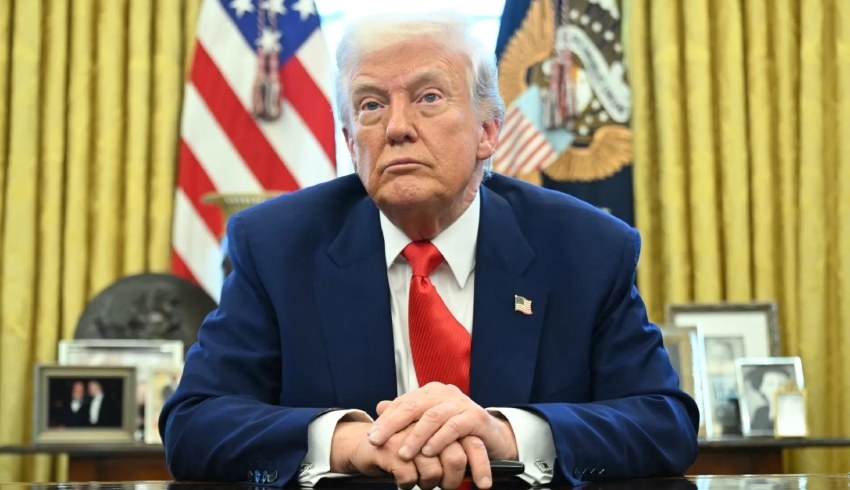
US President Donald Trump has said that funding for military operations against Iran is secured through the end of January. At the same time, he criticized congressional Democrats who are threatening to bring the conflict to an end, warning that such a move could turn a “total victory” into a “defeat.”
In an interview in the Oval Office of the White House, Trump acknowledged that his military options could be limited in January, when Democrats take control of Congress. Nevertheless, he expressed hope that the opposition would not try to end the war prematurely.
According to Trump, Iran’s navy, air force and air defenses have already been destroyed, while the country’s leaders have been eliminated. He also said that the United States could end the war at any moment, whenever it chooses.
Trump launched the war against Iran in February, initially predicting that it would last about four weeks. Following the failure of negotiations with Tehran, a ceasefire was established in April, and a memorandum of understanding was signed in June. However, the agreement collapsed several weeks later when Iran attacked commercial vessels.

Israel supports ending the war through a change of government in Iran. Earlier this month, Trump said that the war was essentially over from a military standpoint, but that he intended to continue the blockade of Iranian ports to force Tehran to reach a nuclear agreement. He described Israel’s goal of bringing an end to the Islamic Republic as potentially achievable, but stressed that it was not his own objective. “I just don't want them to have nuclear weapons. I've never been for or against regime change; that has never been my criterion,” he said.
Two distinct issues are linked in Trump's statements: the funding of continued military operations and their political oversight. He acknowledges that Democrats gaining control of Congress could limit his options, while simultaneously insisting that he can end the war at any moment. These two positions show that the question of when military operations will end is not determined solely by the situation on the battlefield.


Another issue is the uncertainty surrounding the objectives of the war. Trump presents preventing Iran from acquiring nuclear weapons as his primary goal, while Israel considers regime change in Iran the desired outcome. This difference is particularly significant as the blockade of Iranian ports continues and the previous agreement has collapsed.
Statements concerning compensation also show that the dispute between the parties extends beyond military operations. Trump points to American casualties and the killing of protesters in Iran, while Iran has raised the issue of a strike on a school. The figures and accusations presented by Trump remain claims made by the president and should be distinguished from independently verified information.