
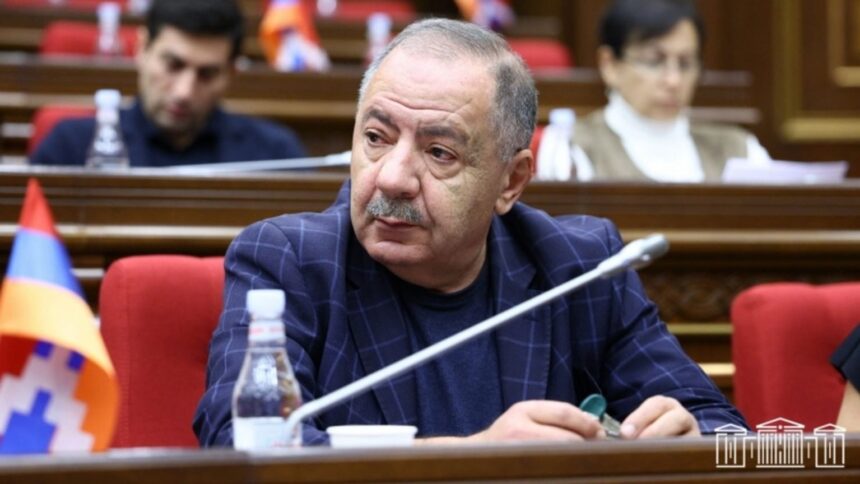
Internal tension within the opposition 'Armenia' faction has noticeably increased over the past few weeks. At the center of the controversy is MP Aghvan Vardanyan, around whom several issues have arisen with his teammates. According to internal party discussions, relations between Vardanyan and another MP, Mesrop Manukyan, have soured after reports reached Manukyan that Vardanyan had discussed negative episodes about him with colleagues during the pre-election period.
This mutual distrust has become one of the significant, albeit not publicly visible, issues within the faction. Beyond personal relations, some MPs are also dissatisfied with Vardanyan's decision not to relinquish his mandate. Before the elections, Vardanyan had publicly promised that if Nikol Pashinyan were re-elected as Prime Minister, he would resign and not accept his mandate. However, he broke that promise and continues to be actively engaged in parliamentary activities.
Some of his teammates view this as a retreat from his pre-election statement, which damages the opposition's reputation and internal trust. These grievances are unfolding at a time when the opposition field is attempting to reorganize and present a more united front. In effect, alongside the struggle against the authorities, the faction is forced to address the contradictions that have emerged within its own ranks.
This case highlights a common problem for opposition political forces: the gap between public promises and actual actions. The example of Aghvan Vardanyan shows how a single decision can undermine team unity in the long run.

When such disputes move beyond the political agenda and devolve into personal conflicts, it is a signal that the structure is in a crisis phase. In the coming months, certain shifts in the faction's composition or silent departures are possible if the parties fail to reach a common understanding. It is important to realize that attempts to reorganize the opposition field will remain futile as long as trust within its own ranks is not restored.