

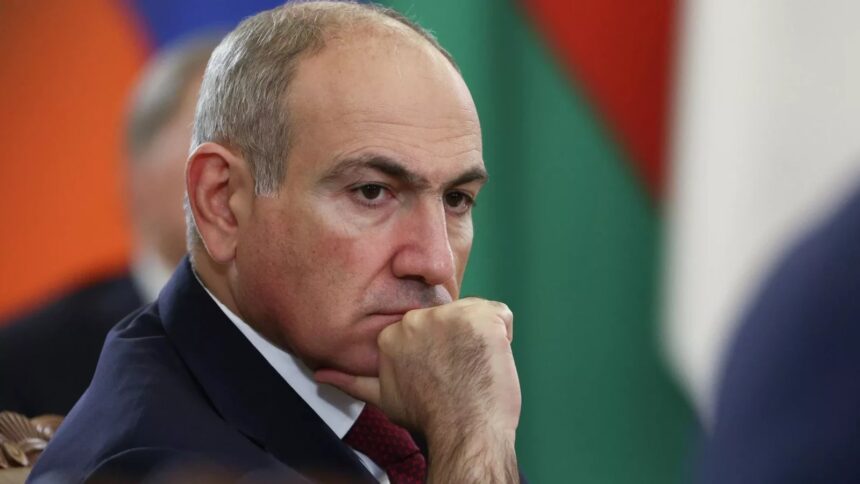
On August 7, Armenian Prime Minister Nikol Pashinyan attended the Eurasian Intergovernmental Council meeting in Kyrgyzstan, where he addressed the potential for European Union membership. He emphasized that legislation adopted in 2025 is aimed at creating economic alternatives for the country, which could also contribute to increasing the competitiveness of the EAEU. The Prime Minister clarified that it is currently impossible to be a member of both structures simultaneously, so adopting legislation on joining the EU does not automatically imply membership.
According to Pashinyan, holding a referendum for Armenian citizens requires long-term institutional preparation, as a vote without these stages would lack substance. He stressed that only after the necessary steps are taken will it be possible to submit a formal application and receive candidate status, which must also be approved by the consent of EU members. The Prime Minister considers demanding a choice from citizens in the absence of these prerequisites to be disrespectful to the people.
The Prime Minister also stated that he is satisfied with the position of his partners, who acknowledge Armenia's right to develop relations with various parties. According to Pashinyan, Armenia's current relations with the EU do not contradict the country's obligations within the EAEU. He emphasized that the EAEU should not be viewed as a space of restrictions, and cooperation with third countries should not be perceived as a "zero-sum game." The foundation of trust and stability is the respect for each other's sovereign rights, the Armenian Prime Minister added.
This statement by the Prime Minister clarifies the current logic of Armenia's foreign policy. Pashinyan makes it clear that interactions with the EU are aimed at expanding the economic toolkit rather than making rapid institutional realignments at this time.

It is noteworthy that the government is trying to avoid a situation where the political agenda could become hollow or lack a legal basis. The question remains as to how these relations will develop if tensions arise within the EAEU regarding Yerevan's European aspirations. Time will tell to what extent EAEU partners will actually respect this "sovereign right."