




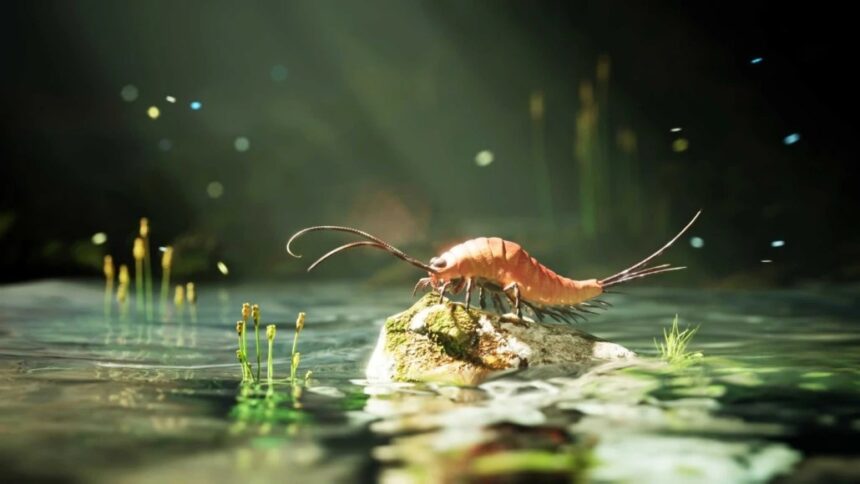
Think of an insect: six legs. A spider: eight. Some millipedes can have up to 1,300. But a 324-million-year-old fossil discovered in Texas shows that evolution's path was far more varied—this ancient creature had 24 legs.
Scientists have named the new species Chosha praecursor, which reached a body length of about 49 millimeters. The name was not chosen randomly; it derives from the Navajo word "ch'osh," meaning "insect," and references their creation myth, in which ancient insect-like beings populated the first continent.
Study of the fossil revealed that six legs, as in modern insects, were used for walking, but additional limb-like appendages—more similar to paddles—were present on the first nine segments of the abdomen. For this reason, researchers believe C. praecursor led a semi-aquatic or amphibious life, living at the boundary between land and water.
"We call insects hexapods, meaning six-legged ones, but it turns out that ancestral forms had many more legs," co-author Erik Tichelka noted with interest. In addition to this specimen, scientists examined two other fossils and determined that all belong to a primitive stem group of insects, helping to fill in the picture of early evolution.


The research indicates that the ancestors of insects were crustaceans, which possessed those extra appendages. Over time, as they adapted to a terrestrial lifestyle, body structure simplified, and abdominal outgrowths gradually disappeared, leaving only the six thoracic legs we see today. This discovery helps us understand how and why the distant ancestors of insects experimented with different leg forms and numbers before finally settling on six.
This finding is particularly notable for demonstrating the experimental nature of evolution—nature spent millions of years trying out various body plans until it found the most successful one. C. praecursor's 24 legs suggest that the ancestors of insects were far more diverse than one might imagine by looking at today's six-legged creatures.



The researchers' comparison with crustaceans further reinforces the view that the transition to a terrestrial lifestyle required major structural changes. The question of exactly what factors led to the disappearance of abdominal appendages remains open, but these fossils seem to hint that the answer is tied to the gradual shift from aquatic environments to land. Perhaps the most intriguing aspect is not the number of legs, but how long that transition took and how many variations were tried along the way.