




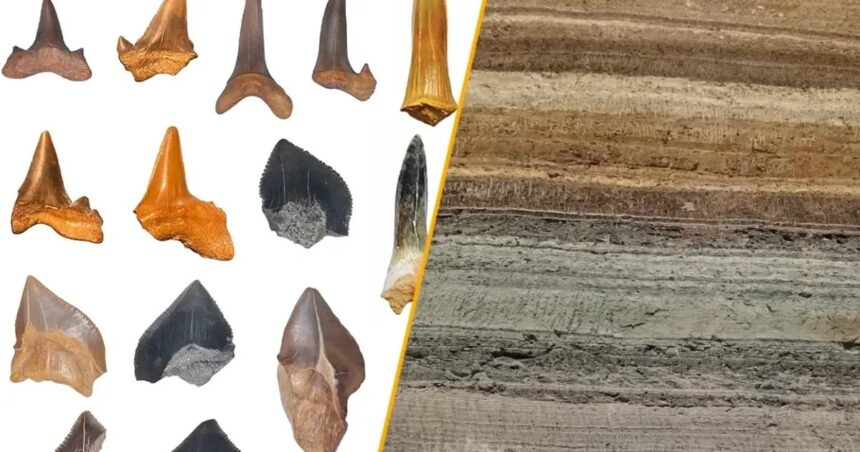
Scientists have discovered fossilized teeth from at least seven species of ancient sharks that inhabited the heart of the Egyptian desert millions of years ago. The valuable find clearly indicates that the area of the modern-day Abu Tartur Plateau was part of a rich marine ecosystem in the distant past.
Researchers discovered the fossilized remains in Late Cretaceous rocks during excavations conducted between 2020 and 2022. They found 14 teeth belonging to at least five shark species previously unknown in this region. Two additional species had been uncovered by specialists during earlier expeditions.
Of particular note is the discovery of a tooth belonging to Scapanorhynchus raphiodon, an ancient relative of modern goblin sharks. This marks the first time the species has been found on the African continent. Meanwhile, two other species—Serratolamna serrata and Squalicorax bassanii—had never before been recorded in Egypt.
The Abu Tartur Plateau is located in Egypt's Western Desert and is associated with the Late Cretaceous Duwi Formation. During that period, global sea levels were significantly higher than today, with shallow seas covering areas that are now completely arid. Earlier research in the same region yielded remains of various fish, sea turtles, and other marine reptiles.


According to researchers, the presence of seven shark species in a single location suggests the existence of a complex ecosystem rich in prey. However, this does not necessarily mean all the sharks lived simultaneously, as their teeth could have accumulated within the same rock layer over an extended timeframe.
The discovery of marine giants' remains in the middle of a desert serves as a stark reminder of how radically our planet's geological landscape has transformed over millions of years. This is not merely a chance archaeological find, but crucial evidence that today's arid lands were once teeming with marine life.



Notably, researchers are in no rush to draw definitive conclusions about all species coexisting at the same time. Such caution demonstrates that analyzing sedimentary rocks requires further investigation and answers. Upcoming excavations on the Abu Tartur Plateau could fully reshape our understanding of the region's ancient climate and ecosystem.