




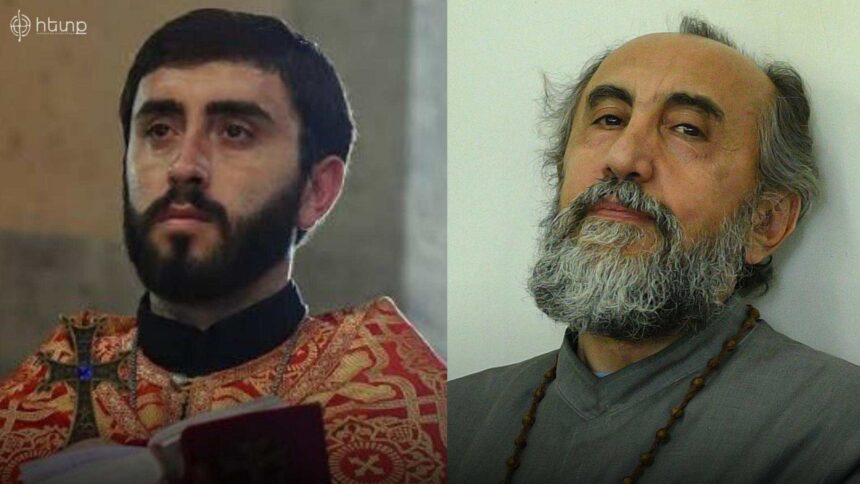
The Court of General Jurisdiction of Ararat and Vayots Dzor Provinces has granted the lawsuit filed by Archbishop Mikayel Adjapahyan against defrocked cleric Stepan Asatryan. The court ordered Asatryan to retract the statements deemed defamatory and pay 1 million AMD in compensation.
The dispute arose following an interview published on January 22, 2026, in which Stepan Asatryan claimed that the high-ranking cleric was "encouraging terrorism" and "issuing threats against the state." Additionally, he declared that the archbishop has a wife and daughter living in Gyumri.
In court, representatives of Archbishop Mikayel Adjapahyan stated that these claims are entirely false, do not correspond to reality, and tarnish his honor and dignity. They emphasized that the plaintiff is a celibate clergyman who has no family and has never been linked to calls for terrorism.
The defense attempted to have the lawsuit dismissed, arguing that the remarks were analytical and evaluative judgments made within the framework of a political debate, while the information regarding the family was taken from press reports. The court, however, recorded that these were specific factual claims for which Asatryan presented no evidence.

According to the ruling, Stepan Asatryan must publish a video message within 5 days containing the exact text mandated by the court, acknowledging that the information he provided was explicitly false. The court also set compensation at 1 million AMD, instead of the requested 2 million.
The verdict was issued on August 31, 2026. It comes into legal force one month after publication and may be appealed to the Civil Court of Appeal.



This judicial ruling sets an important precedent in the domain of public speech responsibility, particularly when statements touch upon a clergyman's vow of celibacy or unverified allegations of serious crimes. The court's decision clearly delineates free criticism from spreading specific, unproven factual information.
Notably, the court took into account that the defendant was previously part of the church community. This means that the speaker was obliged to realize the gravity of the accusations made and their impact on public perception.
Now the main question remains whether the defendant will exercise his right to appeal the verdict to the Court of Appeal within the one-month period or deliver an official retraction within the specified 5-day deadline.