




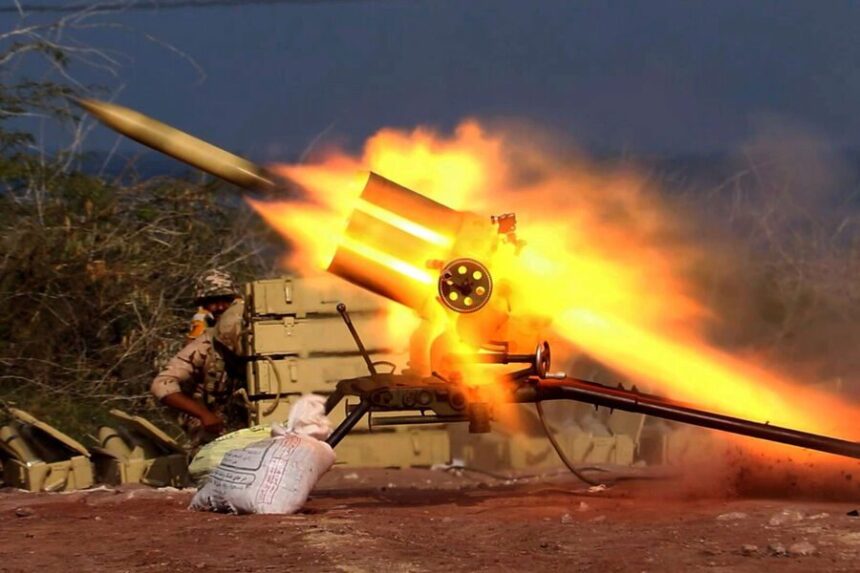
Iran has launched missile strikes on airbases used by US armed forces in Jordan, in retaliation for US attacks on Iranian oil tankers in the Persian Gulf.
The targets were two airbases—Muwaffaq Salti in the Al-Azraq region and Prince Hassan Air Base—with the Jordanian army responding by scrambling fighter jets to intercept the Iranian ballistic missiles.
On September 8, US forces carried out a missile strike on an Iranian oil tanker near Kharg Island in the Persian Gulf, after which Iran's response followed shortly.
Prior to this, the naval forces of the Islamic Revolutionary Guard Corps reported the discovery and seizure of a so-called US "smart" underwater device in the Strait of Hormuz. According to them, it was equipped with the world's latest naval technology and had been delivered to the US Navy last year. The type and name of the device, however, were not specified, leaving further questions surrounding the incident.

Earlier, the US military had reported the interception of ships following the resumption of the blockade on Iran, and all of this appears to bring a new phase in the relationship between the two countries, where military provocations are becoming increasingly frequent.
This retaliatory strike clearly demonstrates that Iran is prepared to respond with military force to any US action, and the selection of airbases in Jordan, outside Iran's borders, serves as a significant signal to both Washington and its regional allies.



It is noteworthy that the strikes were directed not at direct military targets, but at bases used by the US, suggesting that Tehran is attempting to avoid a direct confrontation while simultaneously demonstrating its reach. In this situation, Jordan finds itself in a delicate position, as its territory is inadvertently becoming a theater for the Iran-US conflict, and the local army's response—scrambling fighter jets—indicates that they do not intend to overlook violations of their airspace.
In the coming days, one should likely expect either a new US response or an intensification of diplomatic efforts to prevent the situation from spiraling out of control, as such exchanges, unfortunately, often lead to unpredictable developments.