


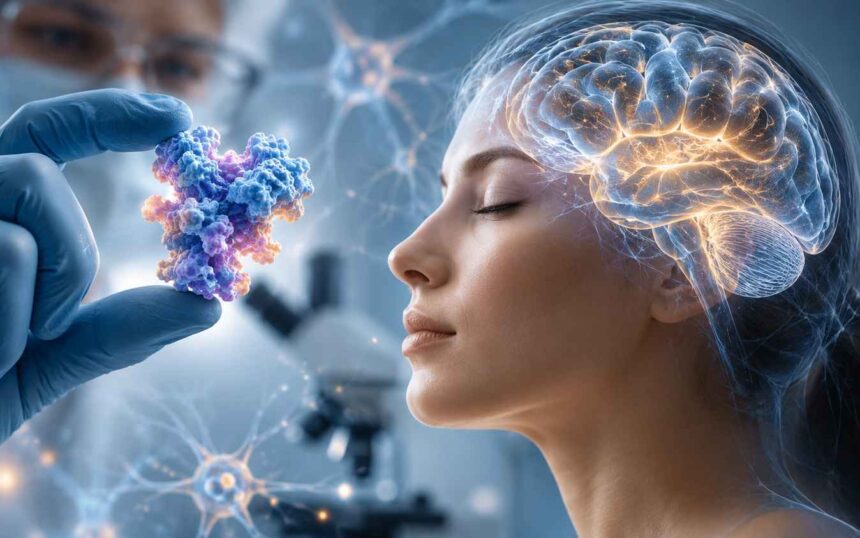
Scientists at the Yong Loo Lin School of Medicine at the National University of Singapore have discovered a protein that may help restore the aging brain’s ability to produce new cells. The protein is a transcription factor called DMTF1, which regulates the activity of neural stem cells.
Neural stem cells contribute to the formation of new neurons, which are important for learning and memory. As people age, these cells become less capable of self-renewal, which is associated with a decline in cognitive function.
The scientists studied human neural stem cells as well as laboratory models that mimic premature aging. They found that DMTF1 levels decline significantly in aged cells, while restoring its expression enables the cells to regain their ability to proliferate.
The researchers also found that DMTF1 regulates the accessory genes Arid2 and Ss18, which help open tightly packed DNA and activate genes involved in growth. Without these genes, neural stem cells cannot effectively regenerate.
The findings suggest that increasing DMTF1 levels or enhancing its activity could potentially be used in the future to slow cellular changes associated with brain aging. However, the current results were obtained primarily under laboratory conditions. Scientists still need to determine whether activating DMTF1 can increase the number of stem cells and improve learning and memory without increasing the risk of brain tumors.
This result is not yet a treatment-ready method, and it is important to keep this distinction in mind. Scientists have shown that restoring DMTF1 under laboratory conditions changes the behavior of aged neural stem cells, but this does not mean that the same effect can be achieved in the human brain.


In the next stage, a key question for the researchers will be not only whether the cells can be restored, but also what effect this has on learning and memory. At the same time, they will need to determine the safety limits, as they plan to study DMTF1 activation without increasing the risk of brain tumors. For this reason, the current discovery is more appropriately viewed as a potential foundation for future treatments rather than an already available rejuvenation therapy.