



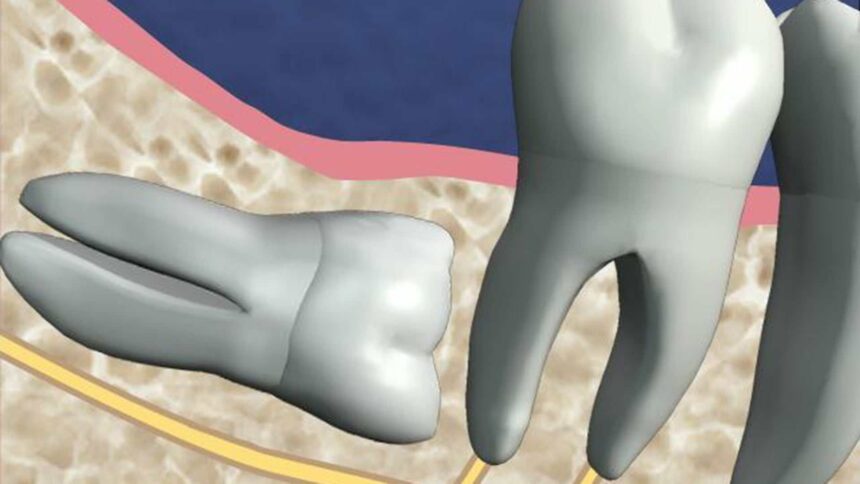
Wisdom teeth erupt between the ages of 18 and 30, when the permanent bite is already fully formed and there is simply no free space left on the jaw. Due to the lack of space, the tooth often grows out crooked or cannot fully develop at all. The eruption process is further complicated by the fact that the thickest bones of the jaw are located in that exact area. As a result of all this, gum inflammation frequently occurs, accompanied by pain, severe swelling, and a high fever.
Due to positional and structural defects, gaps form between the wisdom tooth and adjacent teeth. Food particles constantly accumulate in these areas, making them difficult to clean with a regular toothbrush. The position of the jaw hinders thorough hygiene, causing the tooth to be only partially cleaned. As a result, the microflora of the oral cavity changes, leading to bad breath, dull throat or ear pain, as well as rapidly spreading tooth decay.
Most specialists advise removing wisdom teeth as early as possible to avoid future complications. At a younger age, the surgery goes much easier, and the wound heals significantly faster. Antibiotics are usually not prescribed after removal if the procedure was performed under sterile conditions. Maintaining proper hygiene and performing anti-inflammatory rinses is sufficient.
During pregnancy or in the presence of certain tumors, removal is performed only in cases of extreme necessity. Meanwhile, patients with blood disorders undergo surgery exclusively in inpatient settings.



The issue of wisdom tooth extraction has long gone beyond routine dental procedures and become an important direction in preventive medicine. Modern approaches show that getting rid of a problematic tooth early carries fewer risks than endlessly treating it.
Notably, patients' attitudes have also shifted, with the younger generation being more inclined toward radical yet safe solutions. This helps prevent bite misalignment and damage to neighboring healthy teeth.