



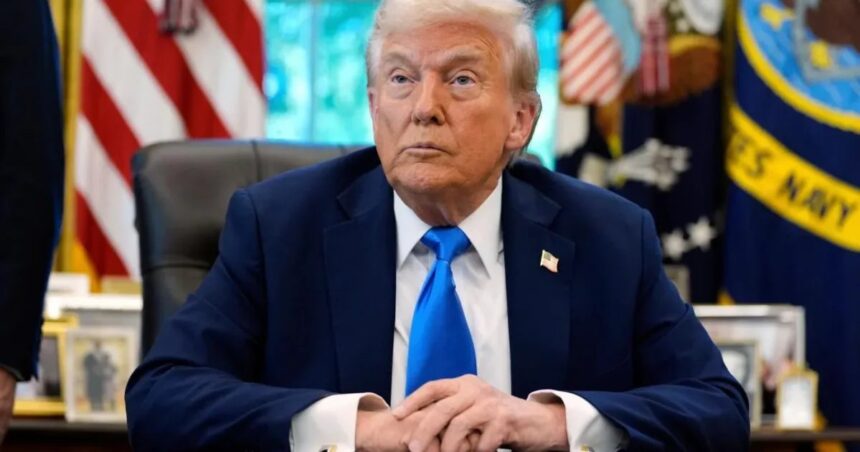
US President Donald Trump expressed conviction that Canada will inevitably join the United States over time, becoming the nation’s 51st state. He made the remarks while speaking to Republican supporters in Arizona ahead of the midterm elections scheduled for November 3. He asserted that this is the only possible outcome and that things simply cannot unfold any other way.
The White House leader claimed that the US does not need its neighbor in any way, whereas Canada itself is heavily dependent on the United States. He emphasized that America previously sustained financial losses of up to $100 billion annually due to trade and economic ties with Canada—a figure he characterized as massive.
At the same time, Trump added that Canadian authorities would ultimately choose the same path as Greenland. Back in September, Trump, Danish Prime Minister Mette Frederiksen, and Greenland’s Prime Minister Jens-Frederik Nielsen signed an official agreement under which total responsibility for the Arctic island’s security was formally transferred to Washington.
Such hardline statements primarily stem from campaign logic. When a politician addresses their own party members and voters, the tone invariably turns sharper, especially when touching upon economic relations or American financial interests.

The mention of $100 billion a year is aimed squarely at a domestic audience. However, talk of annexing a sovereign nation like Canada shifts bilateral relations into an entirely different realm, where security pacts and real policy actions typically prove far more complex than declarations made from a campaign rally stage.