


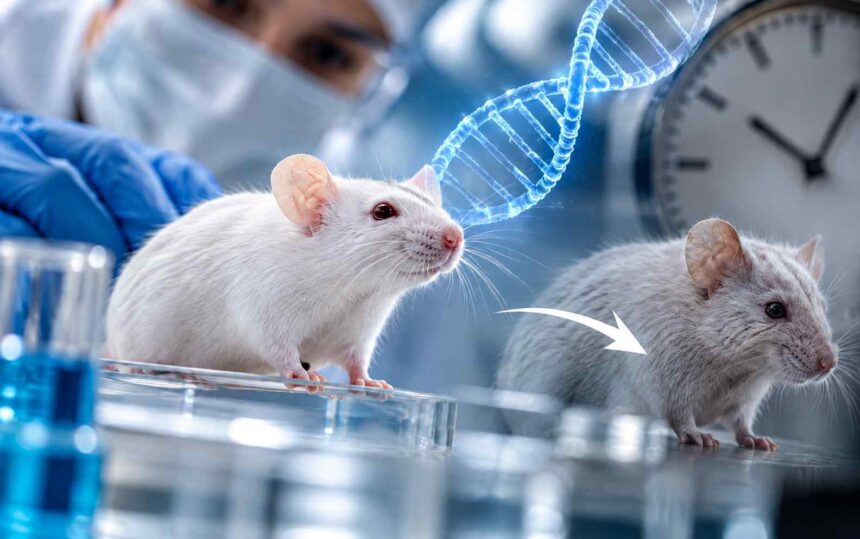
Scientists at the University of Rochester have transferred a naked mole-rat gene associated with the production of high molecular weight hyaluronic acid (HMW-HA) into the genome of mice. As a result, the mice showed improved health and an increase in their median lifespan by approximately 4.4 percent. The study was published in the journal Nature in 2023.
Naked mole-rats can live up to 41 years, an unusually long lifespan for their size. They also rarely develop cancer and are less prone to age-related neurodegenerative, cardiovascular, and other diseases. Their bodies contain about ten times more HMW-HA than those of mice or humans, and previous experiments have shown that removing it increases the likelihood of tumor development.
Researchers transferred the naked mole-rat version of the hyaluronan synthase 2 gene to mice, which aids in the production of HMW-HA. The levels of hyaluronic acid increased in various tissues of the modified mice, and they exhibited stronger protection against spontaneous tumors and chemically induced skin cancer. They also experienced less inflammation and maintained better gut health.
While a 4.4 percent increase in lifespan is not a large figure, the experiment demonstrates that certain biological mechanisms developed in long-lived animals can be transferred to other mammals. Researchers are now exploring ways to slow the breakdown of HMW-HA and increase its production.

The most intriguing aspect of this experiment is not just the 4.4 percent increase in lifespan. More significantly, it shows that a biological trait evolved in naked mole-rats can be transferred to another mammal to produce a measurable impact on health. This suggests that some mechanisms related to longevity can be studied beyond the species in which they naturally evolved.
At the same time, the results in mice do not yet mean that the same approach can be applied to humans. Further work described in the article suggests that the longevity of naked mole-rats is likely linked to a combination of several protective mechanisms, including inflammation control, cancer protection, and DNA repair. Therefore, this is not about a single "longevity gene," but rather about studying biological systems that together may contribute to a longer and healthier life.