


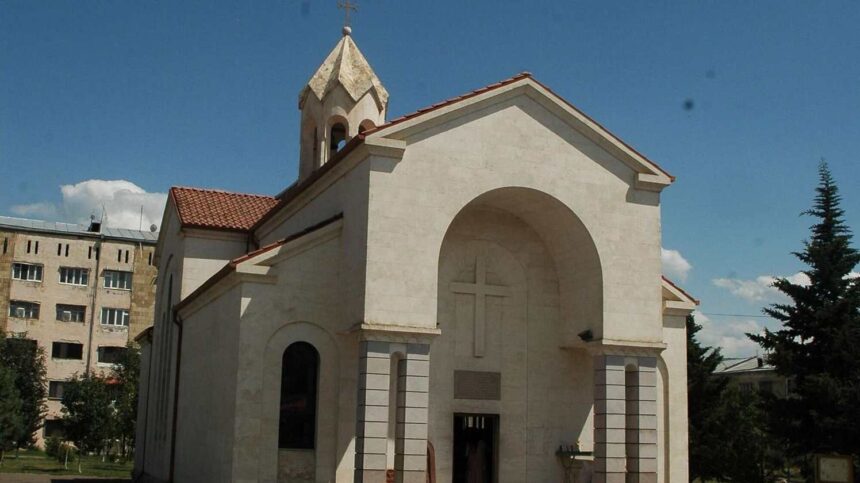
By destroying Armenian settlements, residential neighborhoods and historical and cultural heritage in Artsakh, Azerbaijan is depriving forcibly displaced Armenians of the opportunity to return to their homeland and rebuild community life. This is stated in a fact-finding report jointly prepared by three non-governmental organizations.
The report was prepared by the Union of Artsakh, the Center for International and Comparative Law, and the Rule of Law organization. The authors documented numerous cases of Armenian monuments being destroyed or altered, as well as entire settlements being razed to the ground in territories that came under Azerbaijani control following the 2020 44-day war and the military operations of September 2023.
In conducting the study, the organizations used videos and photographs published online, investigative reports by international media outlets, and satellite imagery taken at different times.
The report also examines Azerbaijan's 'Great Return' program. According to the authors, illegal resettlement is being carried out in Armenian settlements under the program: in several locations, new buildings are being constructed on the sites of demolished Armenian homes, while entire neighborhoods are being razed in some settlements.

The authors note that these actions not only violate property rights but also eliminate the material conditions necessary for displaced Armenians to return. The destruction of spiritual and cultural heritage also threatens the preservation of community memory, national identity and traditions.
The report states that these violations are also being committed in breach of several orders issued by the International Court of Justice concerning the rights of the people of Artsakh.



The authors believe that the right of return means more than simply having the opportunity to return to one's homeland. It must include genuine guarantees of the right to live in one's own community, preserve one's national identity and restore community life.
The organizations are calling on the international community and relevant institutions to take immediate steps to prevent further destruction of Armenian heritage and property, ensure their preservation and accessibility, and protect the right of the people of Artsakh to return to their homeland in safe and dignified conditions.
The central issue raised by this report is not limited to the fate of destroyed buildings or monuments. When entire residential neighborhoods disappear, the right of people to return becomes much more difficult to exercise in practice, since returning to one's homeland also requires adequate living conditions.
The substance of the right of return is particularly important in this context. If people are allowed to return but no longer have their homes, communities or the cultural environment through which they express their national identity, such a return cannot be considered complete. This is the distinction emphasized by the report, which views return not merely as the possibility of moving back, but as the right to rebuild a normal life.


The next crucial step is to secure an international legal assessment of the documented cases and address the protection of the affected sites. The organizations' appeal concerns not only heritage that has already been damaged, but also the need to ensure conditions in which the right of the people of Artsakh to return remains achievable rather than merely a legal formulation.