




Archaeologists in Egypt have made two significant discoveries that shed light on the country's past, as reported by The Associated Press.
The first discovery occurred in the Dakhla Oasis, located in the western part of the New Valley Governorate. Here, a settlement dating back to the 4th century CE, from the Byzantine Empire era, was unearthed. A well-planned urban layout was found, featuring streets that intersect with main roads, forming squares. In the northern part of the settlement, remains of a mid-4th century basilica and guard towers were identified.
Also found were fortified residential buildings, reception halls, and the "House of Tisos," which may have been used as a house church. Baking ovens, kitchen rooms, millstones, bronze coins of Byzantine emperors, Latin inscriptions, and Christian symbols were discovered. Particularly valuable are approximately 200 ceramic fragments (ostraca) with records of commercial transactions and daily life.
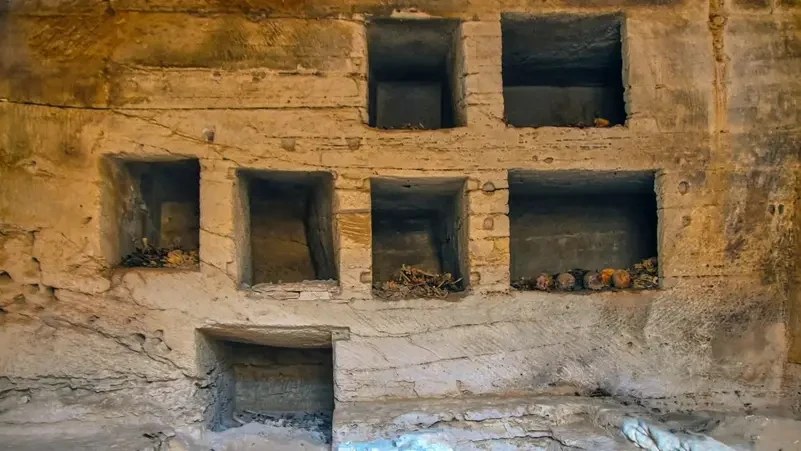
The second discovery was made in the Marina El-Alamein archaeological site, about 100 kilometers west of Alexandria. Here, 18 ancient tombs were found, including 11 rock-cut and 7 above-ground stone tombs. The total number of tombs in this area has now reached 48. Pottery, vessels, lamps, altars, and limestone containers were found in the graves.



A 2.5-meter long granite sarcophagus containing human remains and an adjacent plaster sphinx statue attracted particular attention. In some graves, golden objects were found in the mouths of the deceased, linked to the "golden tongue" burial ritual.
Marina El-Alamein represents the remains of the ancient Greco-Roman port city of Leukaspis, which existed between the 2nd and 4th centuries CE. Egyptian authorities believe that such findings increase the country's attractiveness as a center for archaeological tourism.