



Agreements reached between Iran and Oman on navigation through the Strait of Hormuz do not yet mean the strait will reopen. A source close to the Iranian negotiating team told the Tasnim news agency.
According to the source, Iran has conveyed seven conditions for reopening the Strait of Hormuz to the American side through intermediaries, but did not disclose their content. The source noted that the conditions have been approved by the Islamic Republic's top leadership, and the strait will remain closed until they are met.
Agency source also reported that after intensive technical and diplomatic negotiations, Tehran and Muscat reached a final agreement in late August, and it is expected to be announced soon in the presence of foreign ministers of Persian Gulf countries.
The source emphasized that the agreement was concluded exclusively between Iran and Oman. Other countries in the region, as well as Iraq, will attend the upcoming meeting only to familiarize themselves with the agreed routes and transit conditions.
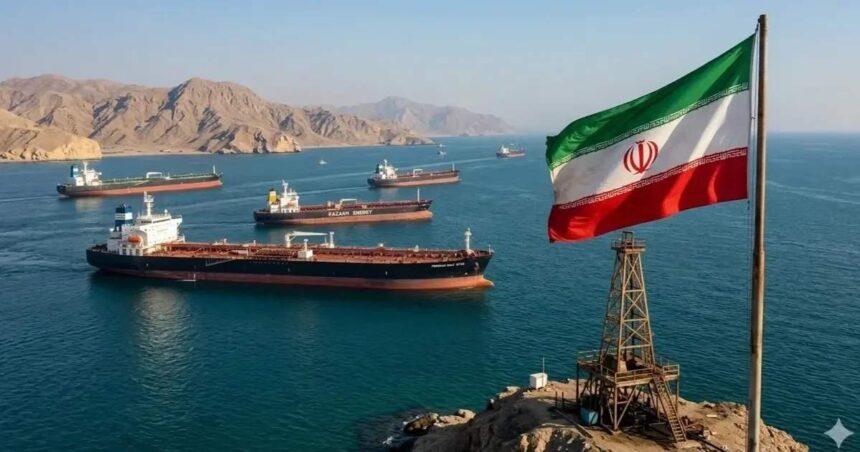
Under the reached agreements, new routes for entering and exiting the Persian Gulf through the Strait of Hormuz have been established. The entry route will pass entirely through Iran's territorial waters, and part of the exit route will also be in Iranian waters. Transit through these routes will be carried out in accordance with protocols established by Iran.
If the agreement is implemented, the southern route, whose opening the US had previously sought and which had become one of the main sources of tension, will be closed. At the same time, the source specifically emphasized that the agreement reached with Oman does not mean the reopening of the Strait of Hormuz.



Thus, the agreements with Oman define the procedure for a possible reopening of the strait, but the decision on resuming navigation, according to the source, depends entirely on US actions and the fulfillment of conditions put forward by Tehran. In Iran, this agreement is seen as a step toward consolidating their sovereignty over the route passing through the Strait of Hormuz.
The establishment of new routes practically means that Iran is trying to establish control over flows passing through the Strait of Hormuz without speaking of a formal reopening. The full passage of the entry route and partial passage of the exit route through Iranian territorial waters gives Tehran leverage that it previously lacked.
The closure of the southern route is a direct blow to Washington's previous efforts, which for years tried to secure an alternative route. However, the secrecy of the seven conditions leaves questions: it is unknown what exactly is demanded of the US and how long Iran is prepared to wait.
The presence of Persian Gulf countries at the upcoming announcement does not yet mean they have agreed to the new arrangement. The role of Iraq and others is for now purely familiarizational, which could create tension in the future if their interests are not taken into account.