



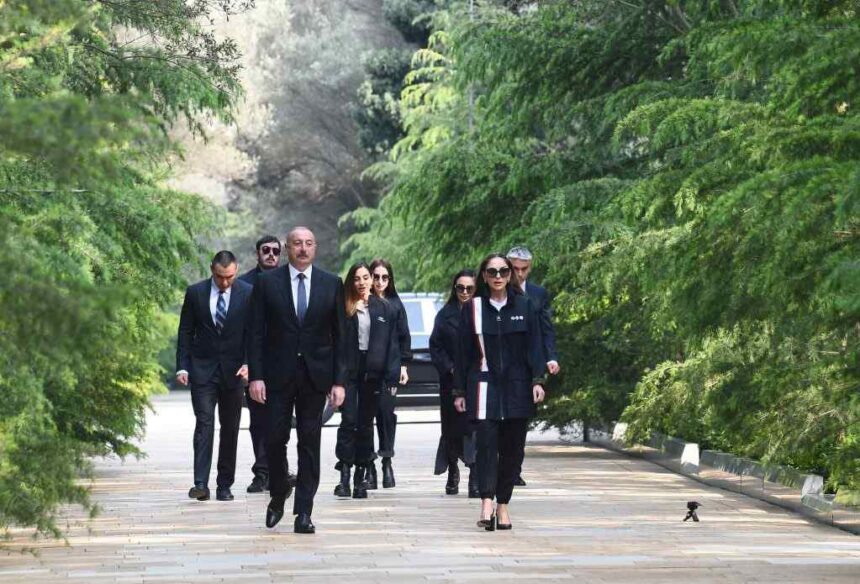
The names of Ilham Aliyev, who has ruled Azerbaijan since 2003, and his family members have appeared for years in numerous journalistic investigations accusing them of various corrupt activities, while investigations into their properties have been published in cities around the world.
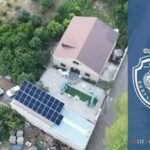
This time, an investigation by the independent Azerbaijani outlet Meydan TV has determined exactly where and in what mansions and summer residences the ruling family lives, having acquired vast properties abroad, and the outlet emphasizes that although the Azerbaijani government has for years created obstacles for investigative journalists by restricting their access to publicly available information, they have managed to compile a map of properties belonging to the Aliyevs using information obtained from local residents and their own sources.
The interactive map shows the locations of real estate used by Ilham Aliyev and his family across Azerbaijan, and the publication has also released articles about illegalities committed during construction, which led to the displacement of residents of Kusnet village in Gabala, restricted access to the forest zone of Khoshbulag village, and blocked tourist movement around Nohur Lake, one of Gabala's most beautiful sites, while some buildings were constructed in strategic and protected areas.
Currently imprisoned investigative journalist Sevinj Vagifqizi proved in a 2015 report that Kusnet village in Gabala was evacuated because of Ilham Aliyev and his daughter Leyla Aliyeva, where construction of the presidential residence began in 2011, and the 16 families living in the village at that time, who had not left it during the Soviet years, moved out in 2012, received compensation, and now live in Gabala.
This investigation reveals an important pattern that rarely receives attention: for the personal convenience of the ruling family, public resources — whether agricultural land, forest, or a scenic lakeshore — become restricted zones, while local residents are simply "displaced" as obstacles.
Notably, all of this is done not in secret but openly, under the watch of security forces, suggesting that the violations are systemic rather than incidental. Although local residents have received compensation, the issue is not just about money; it is about depriving people of their place of residence, work, and ordinary life — something that cannot be compensated with money.



The fact that investigative journalists are imprisoned and state websites are blocked from abroad indicates that Azerbaijan's authorities are aware of the danger of these revelations. The question that remains unanswered is whether the international community is prepared to respond not with statements but with concrete actions when it comes not just to elections but to people's right to everyday life.